Lets say you die tomorrow
The moment you receive this information, something inside you collapses. Not physically, mentally.
The will to live doesn’t disappear, but it freezes when time suddenly feels limited.
Cancer is one of the world’s biggest health challenges, we haven’t been able to cure yet. And knowing that a cure may not come soon, the focus cannot remain only on survival.
It must also shift toward adding life to the days that remain.
This is where the psychological aspect matters. Because even when the body is fighting, the mind still needs reasons to stay present.
1/3
of cancer survivors experience depressive symptoms and anxiety
52%
of patients are affected by psychological distress
~70%
is the fear of recurrence, even years after remission
DESIGNING WITH CARE
Designing for people already carrying emotional weight changes everything.
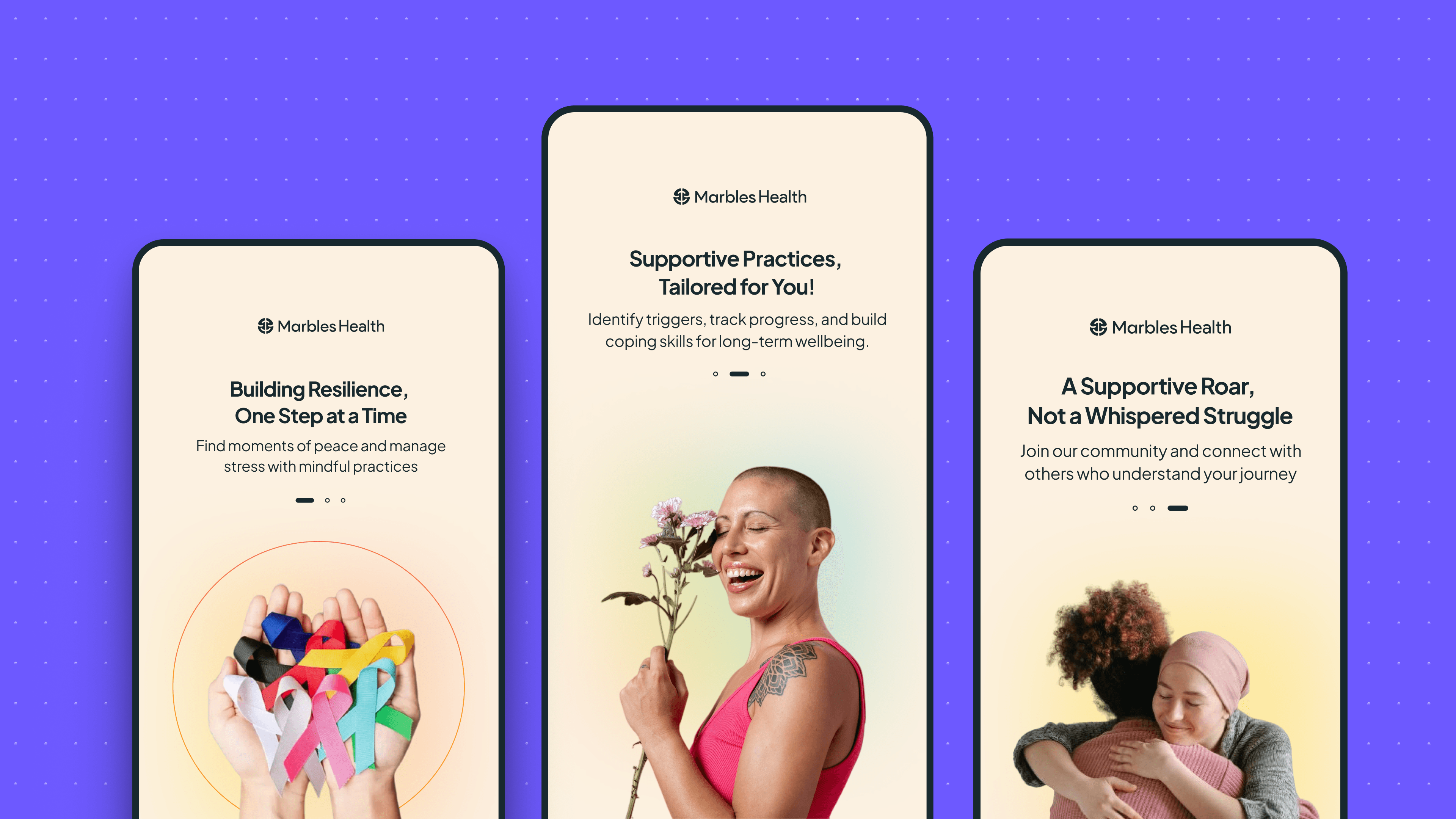
People battling with cancer have hard times, talking to family and even telling them that they have lost will to live. We had to ensure a platform where they feel hope to enjoy life and get educated more on how they can improve their health as much.
The goal was to make the app feel safe to return to, even on hard days.
SHAPING THE EXPERIENCE
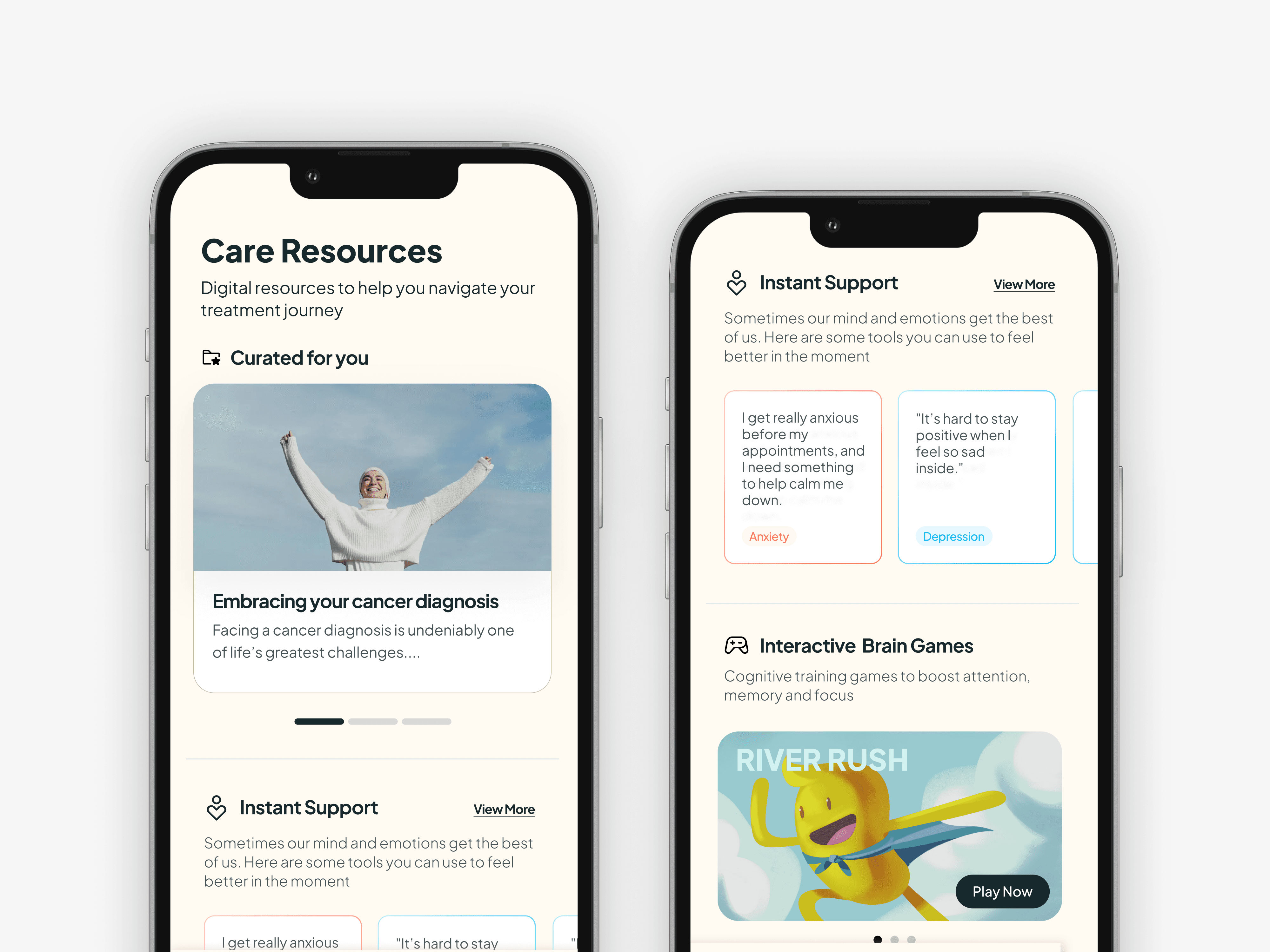
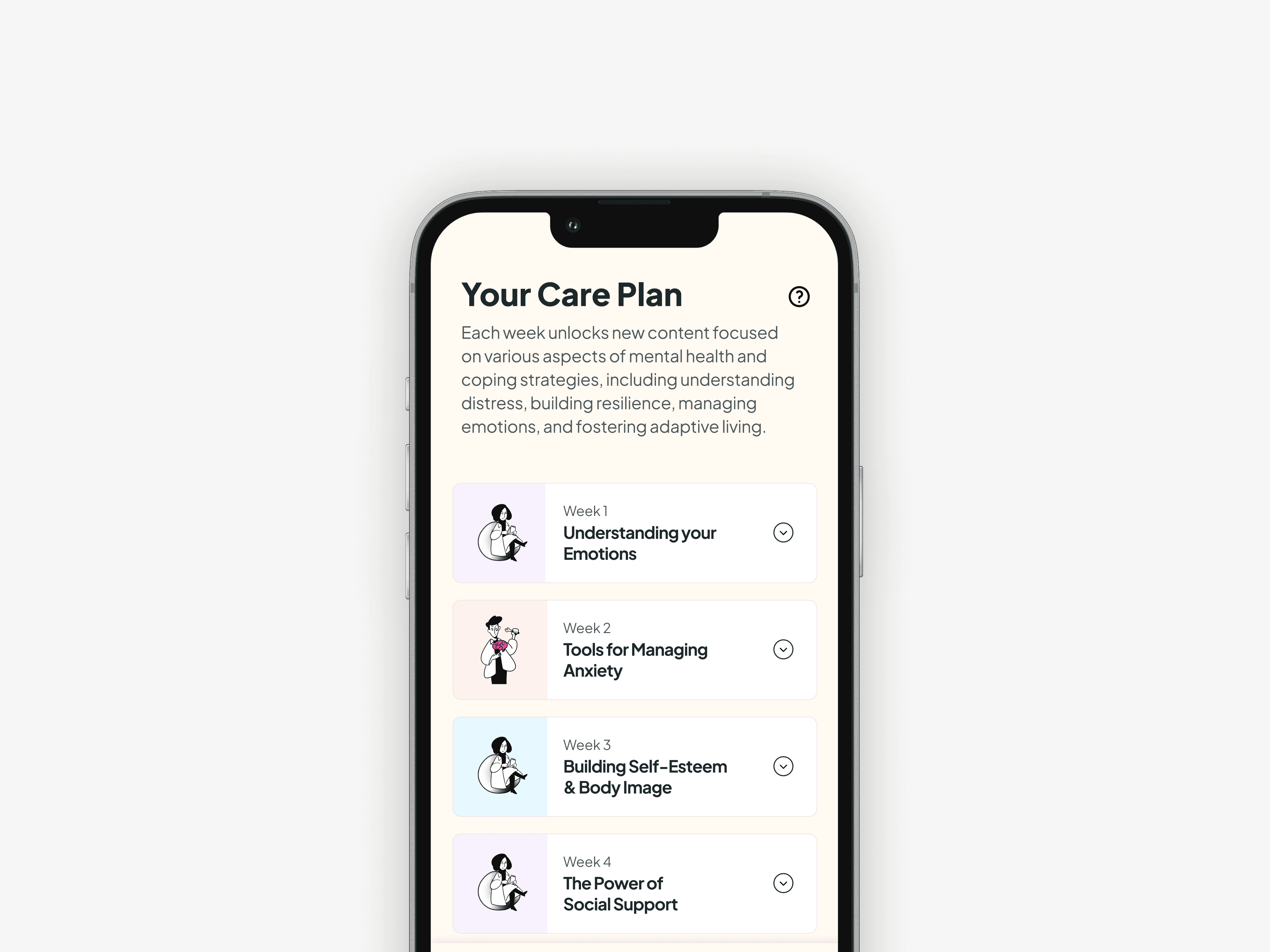
Designing module-based experience
Content was broken into:
Short, day-to-day modules
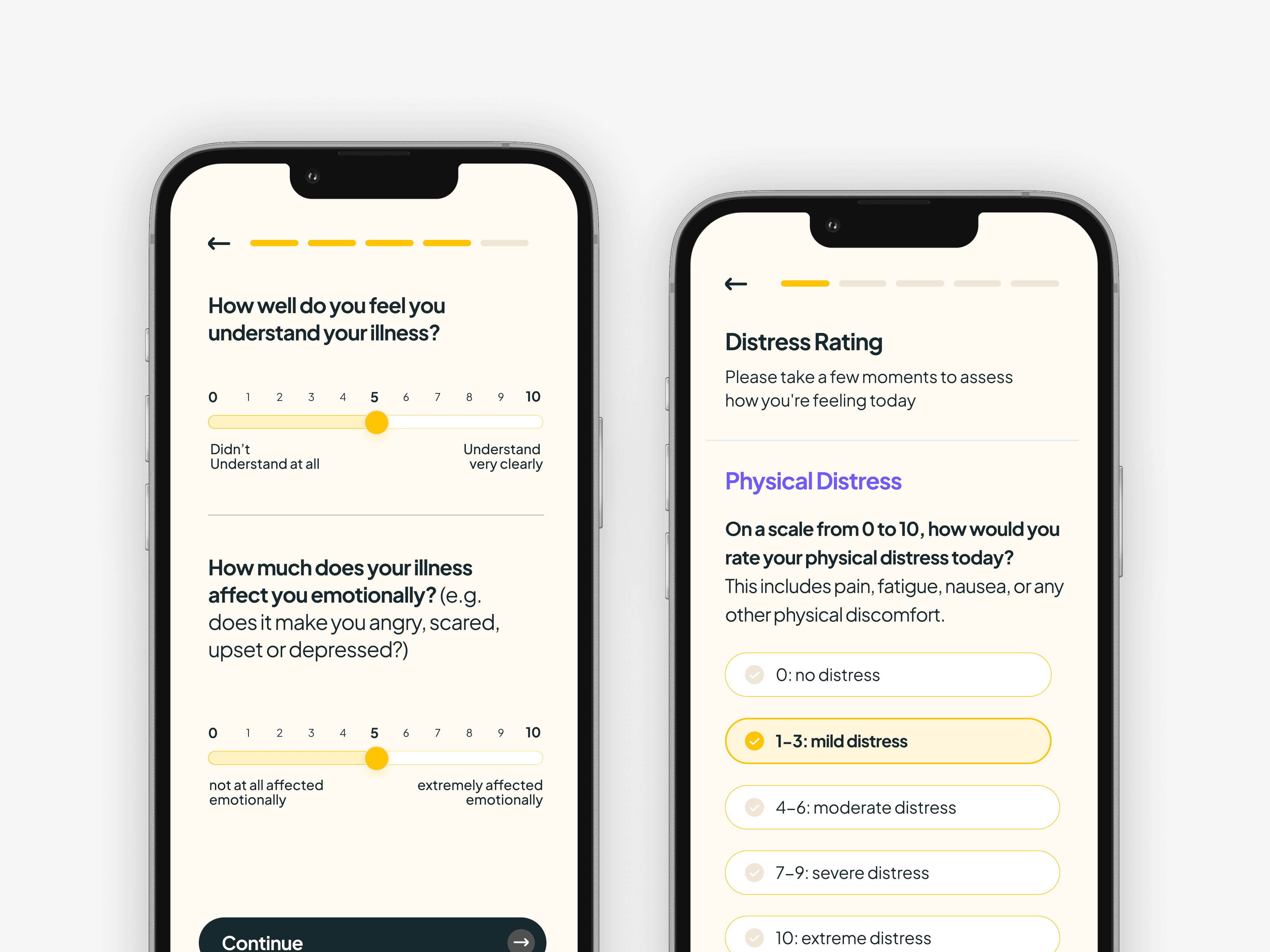
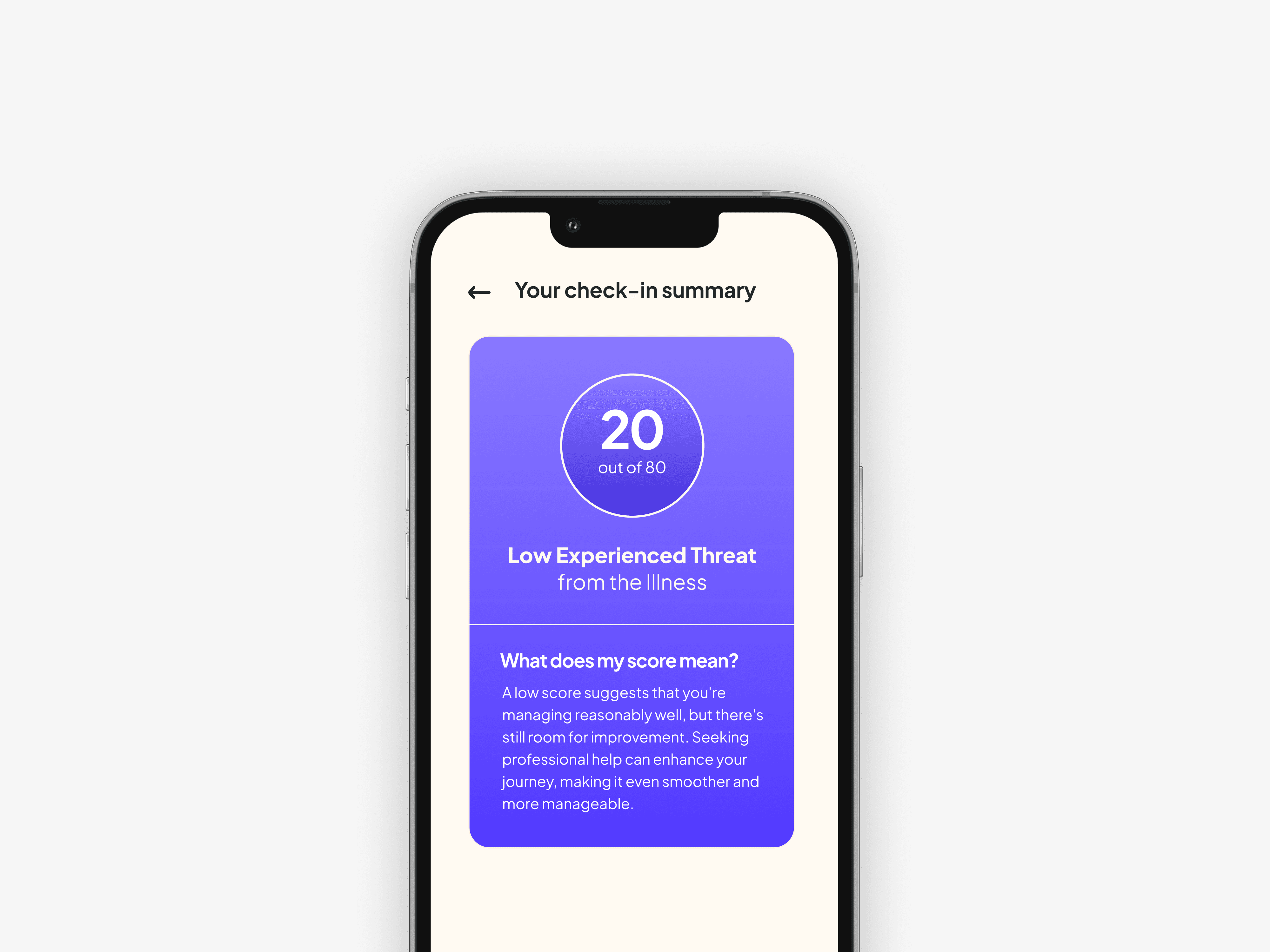
Question-and-answer formats that encouraged reflection
Light, game-based interactions aimed at easing stress
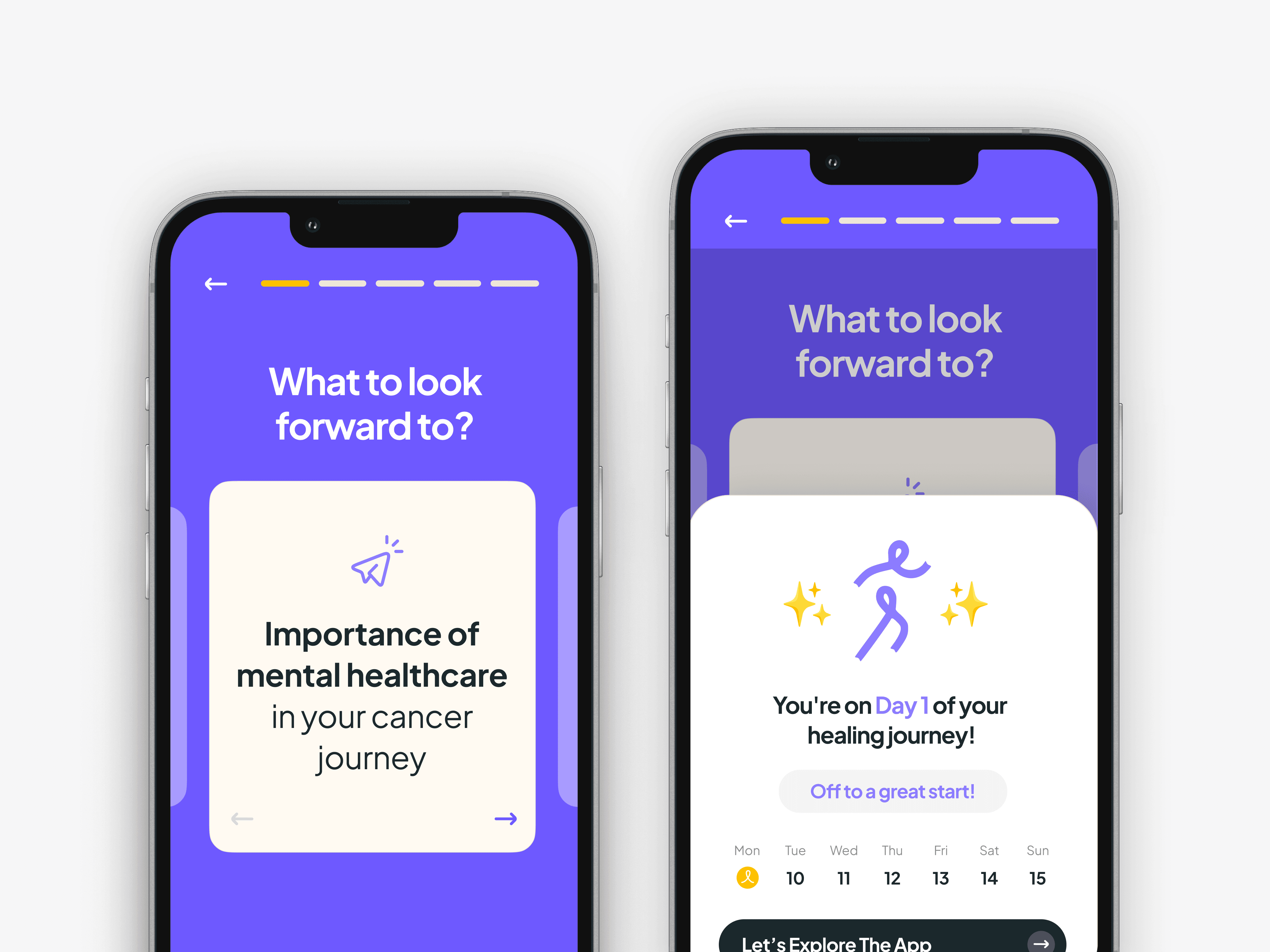
There was no sense of completion or progress pressure.
Users could pause, skip, or return without feeling behind.
Education, emotional support, and relaxation were woven together quietly, without drawing attention to the system delivering them.
EXPLORATION & DESIGN
Close coordination with clinical psychologists.
Design decisions were shaped in coordination with clinical psychologists.
Rather than optimising for engagement metrics, the focus stayed on:
Emotional appropriateness
Tone and pacing
Respecting the user’s mental state
What the product chose not to say mattered as much as what it included.
Every screen was designed with the understanding that users may already feel vulnerable.
The experience prioritises empathy and responsibility over novelty—because in this context, restraint is a design choice.