How complex is it to run fleet operations?
Imagine you are a truck owner with 180 trucks. On any given day, around 120 are on the road.
Every day, for each running truck, to create trips, make payments and get reports, you need to juggle through different websites, apps and even notebooks. And this has to be done in bulk everyday.
It is non-stop constant coordination. And the bigger the fleet gets, the harder this becomes to keep in control.
<50%
fleets use end-to-end digital tools for day-to-day operations.
10-12
disconnected tools are used daily to manage trips, payments, documents, and reporting.
40%
of operational time is lost to manual coordination, follow-ups, and reconciliation.
ROOT CAUSE
System fragmentation at operational scale
As fleets digitised, different needs were solved independently:
Tracking focused on vehicle movement
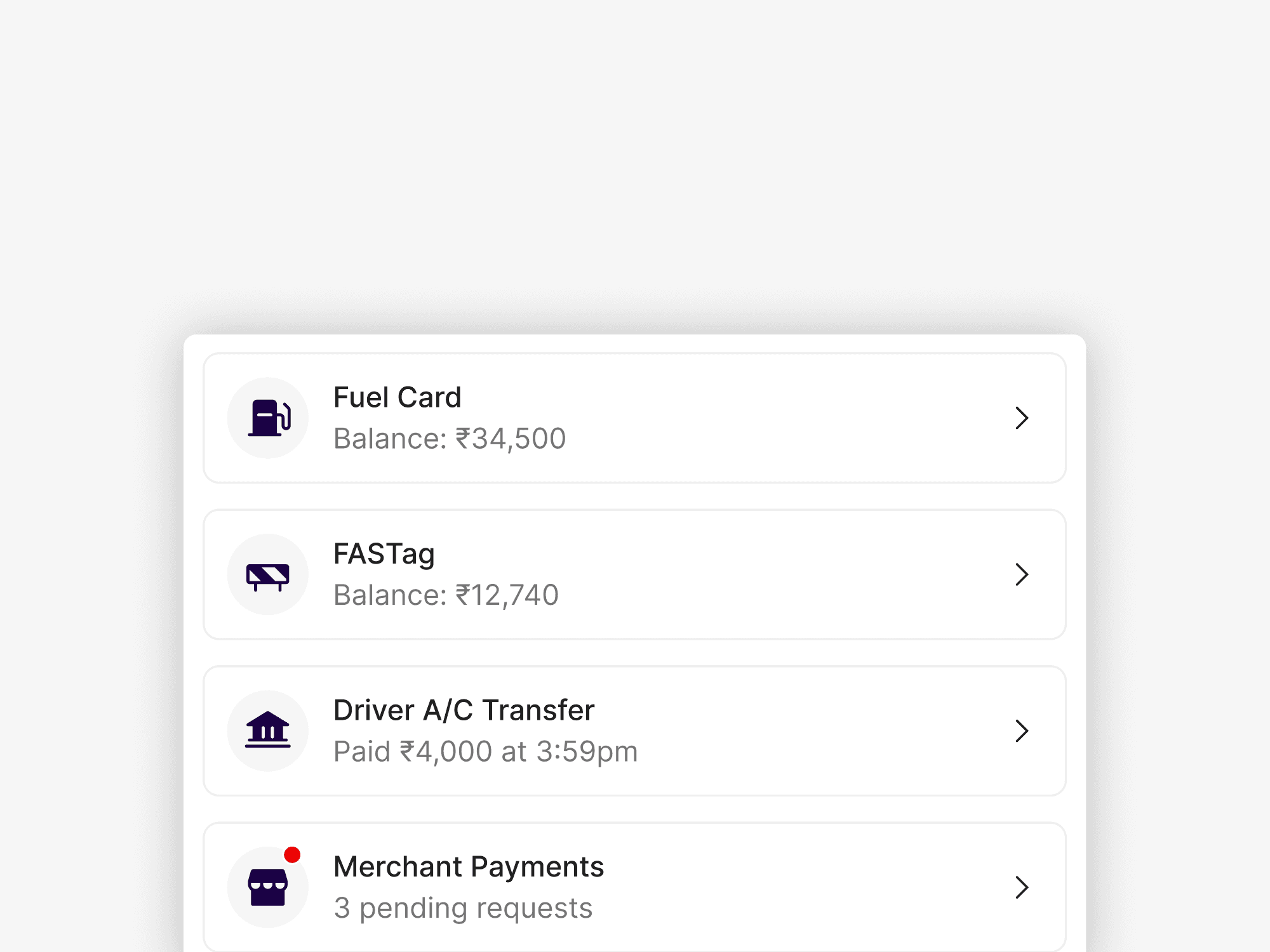
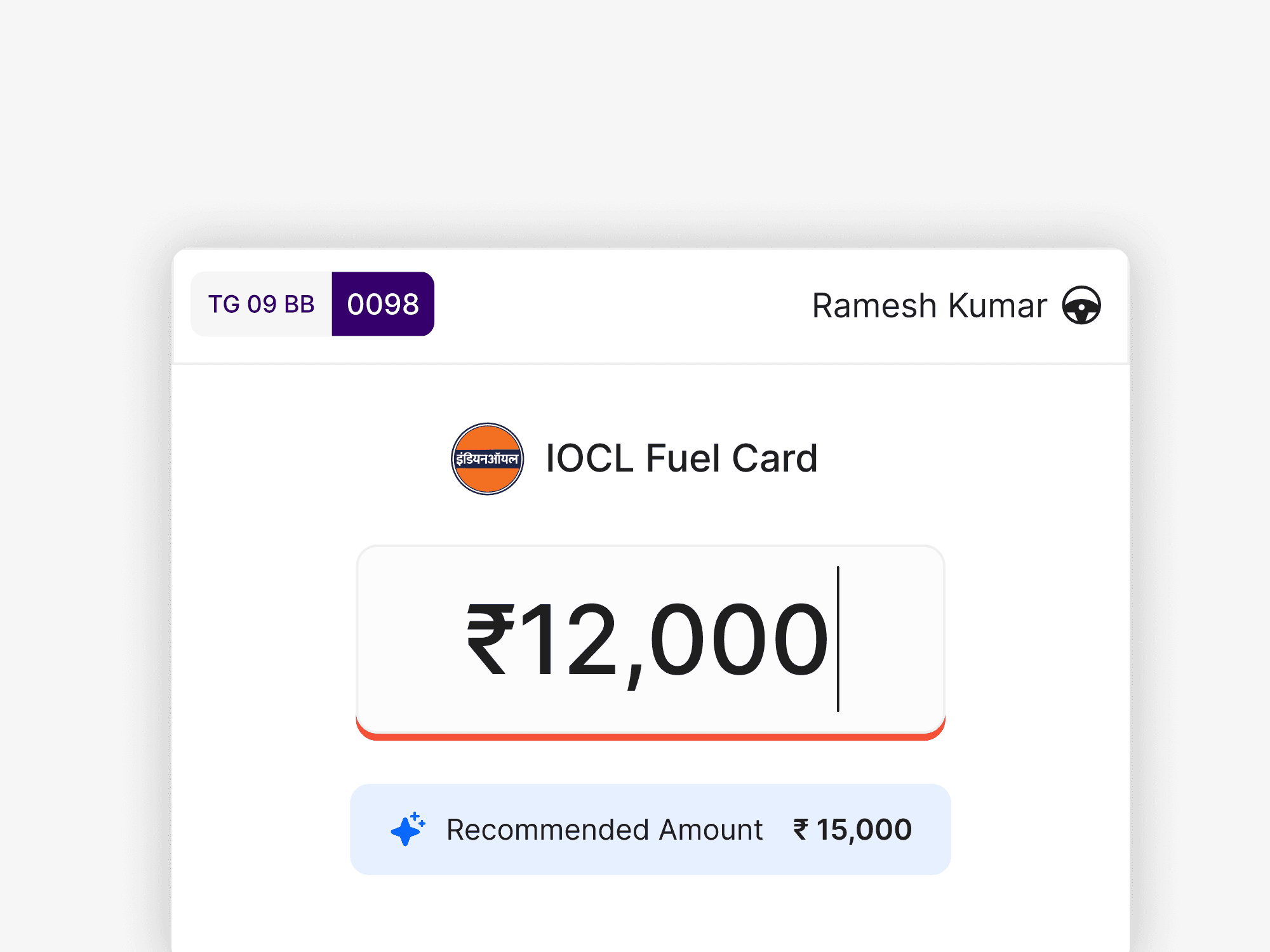
Payments evolved around fuel and vendor settlements
Reporting and accounting followed compliance and audits
Each system solved a local problem well, but none were designed to work together.
Data consistency depended on manual checks
Workflows crossed tools without clear ownership
Users became the integration layer between systems
OPERATIONAL DRAG
The hidden cost of disconnected systems
This fragmentation directly shaped how fleet owners and operators worked every day.
In practice, this looked like:
The same trip being referenced across multiple tools
Payments verified outside the system they were created in
Reports built by reconciling data, not reading it
As fleets grew, decision-making slowed due to lack of confidence in it.
EXPLORATION & DESIGN
Reducing cognitive load across platforms
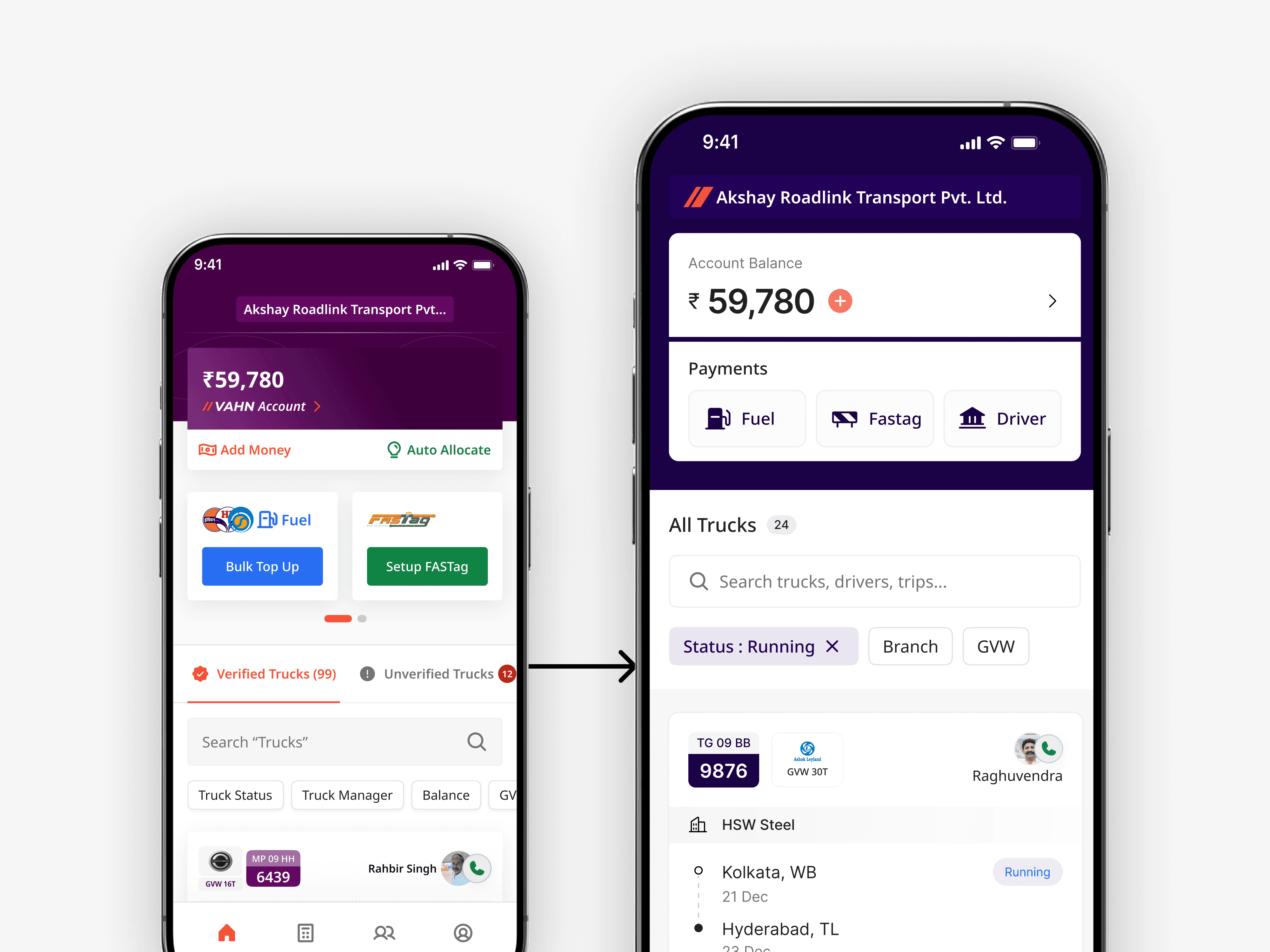
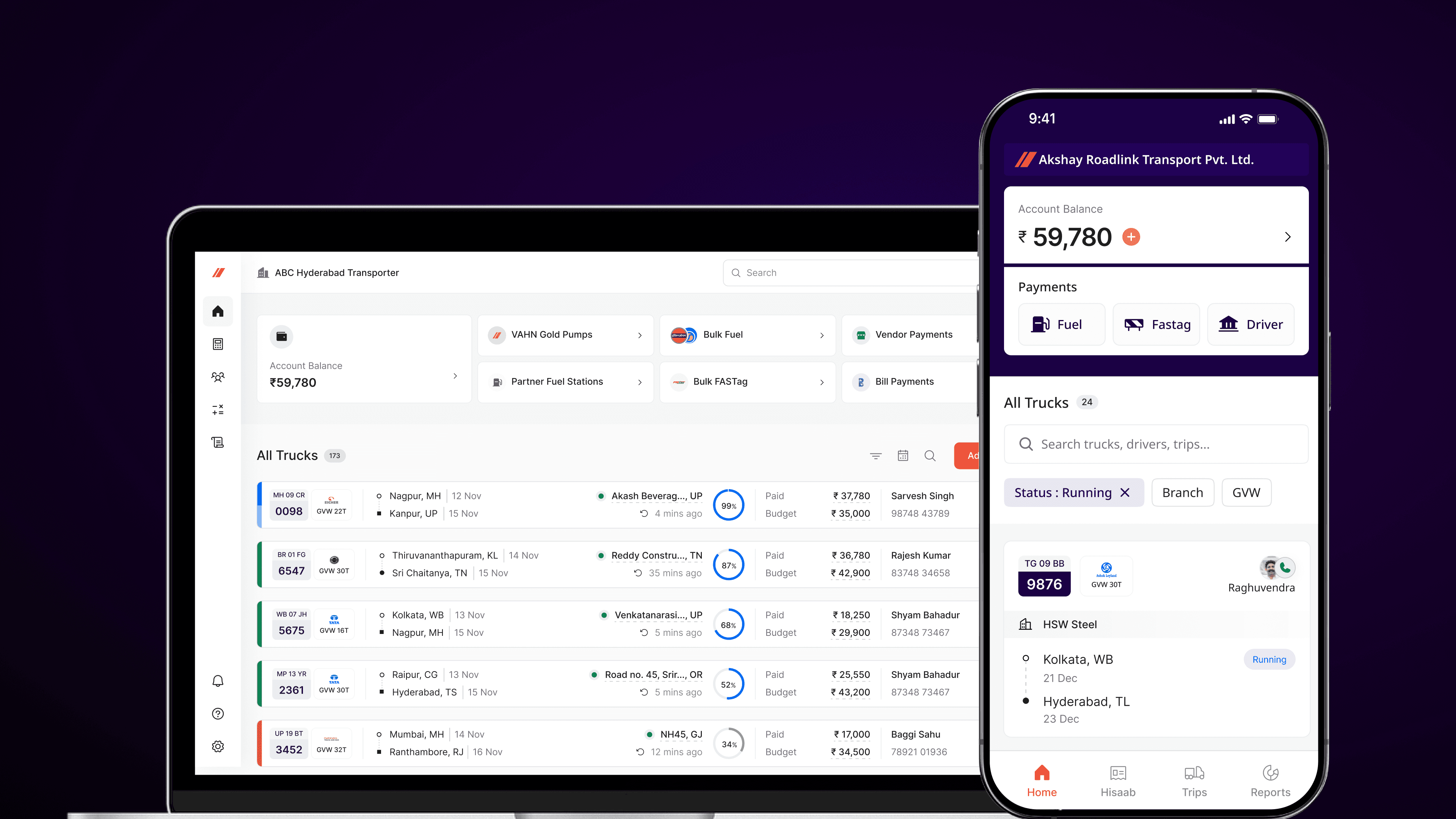
Exploration began by mapping how the same operational workflows behaved differently on mobile and web.
Mobile needed
Fast access
High scannability
Fewer decisions per screen
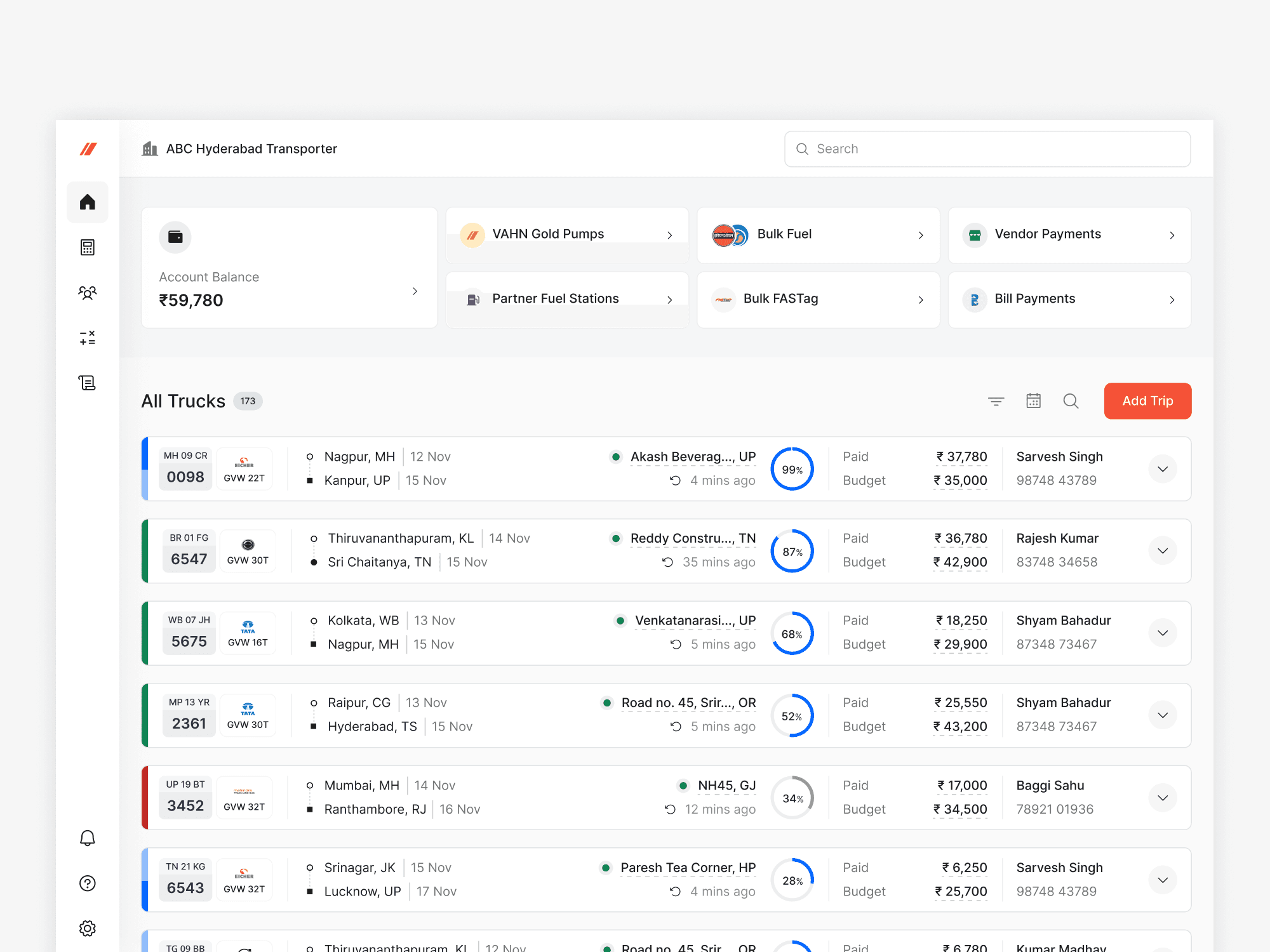
Web needed:
Control and oversight
Dense but readable information
Confidence in numbers and status
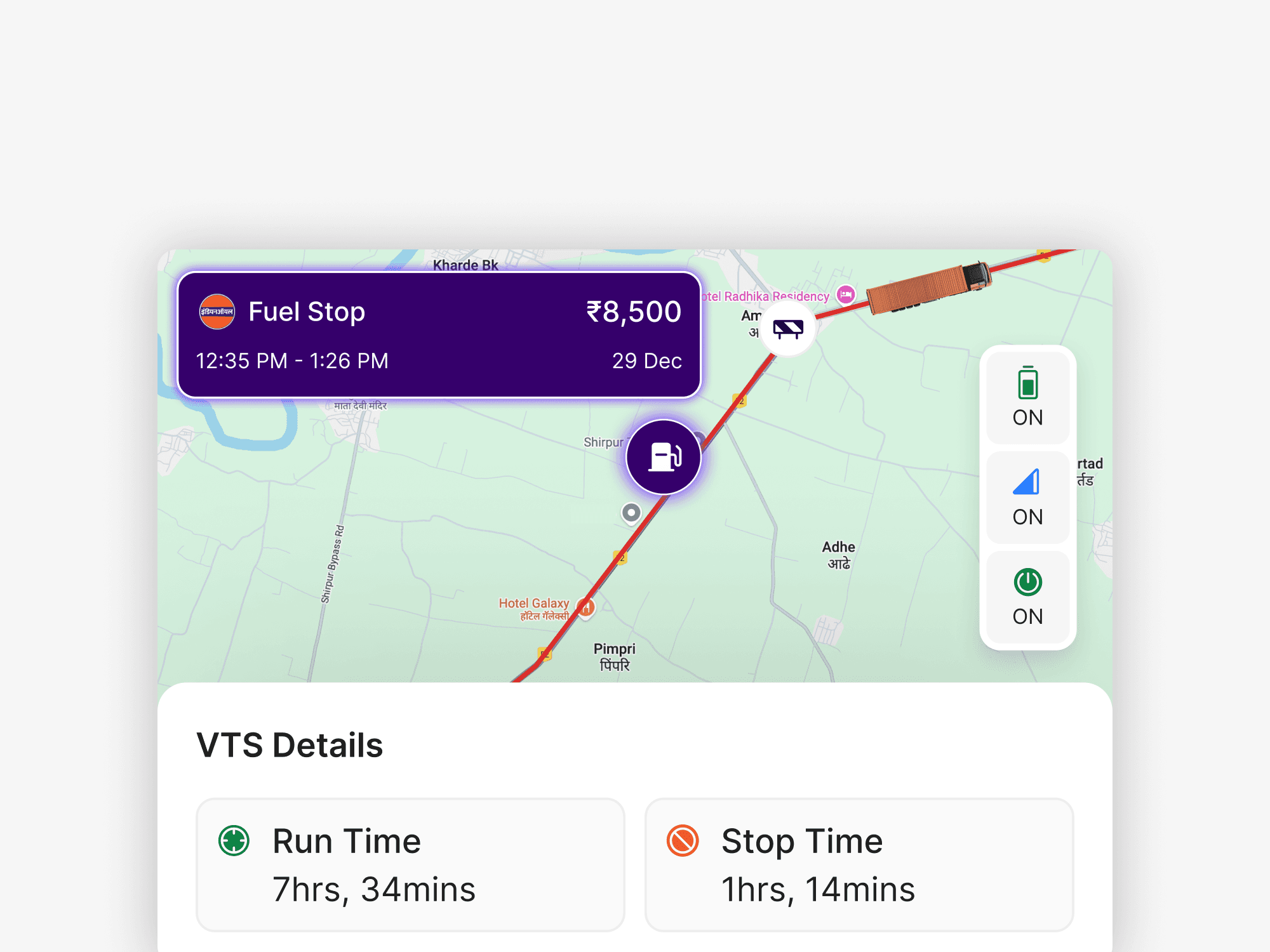
And so the design focused on a shared system logic:
Common entities, statuses, and terminology
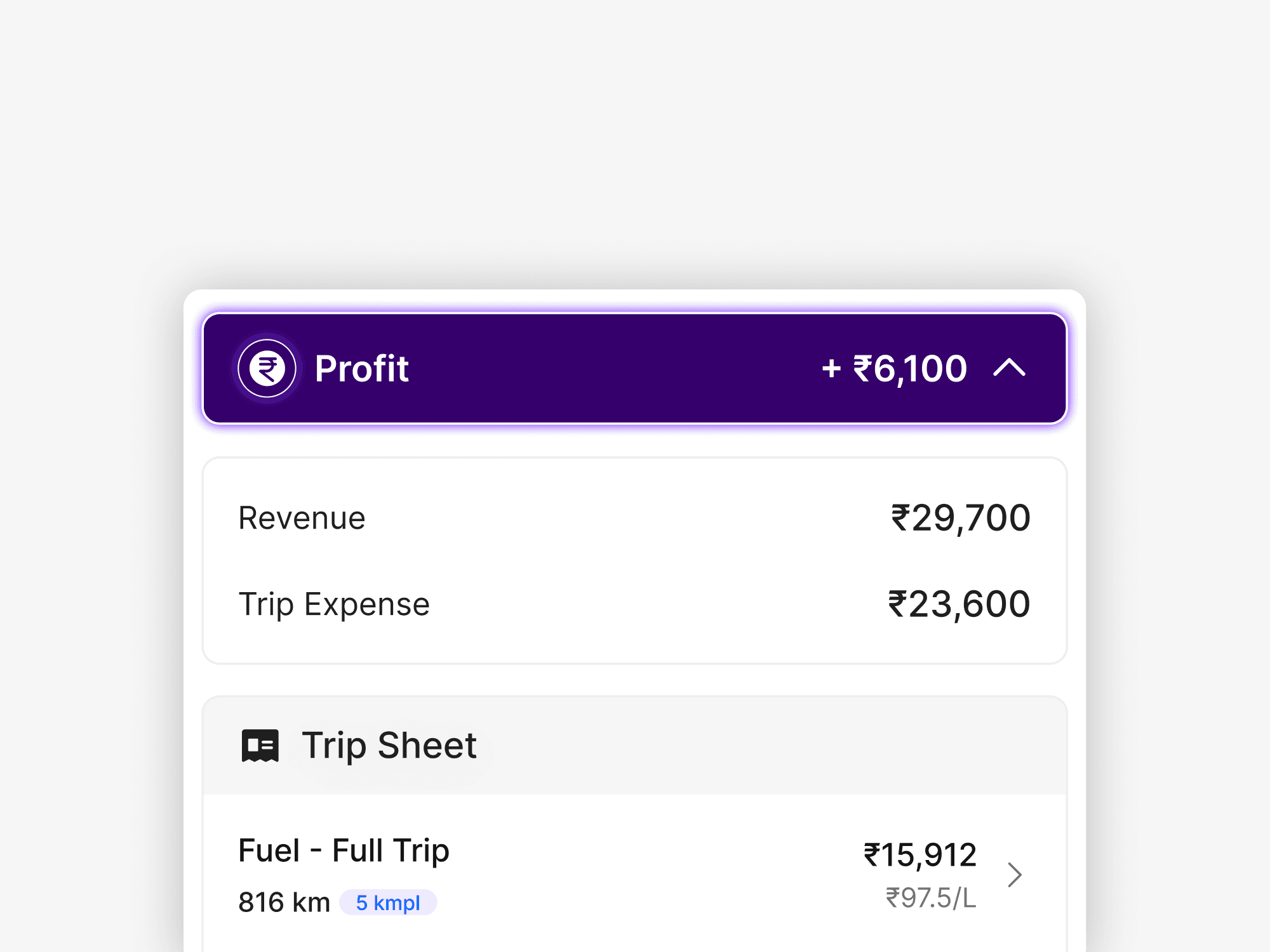
Predictable flows from trips to payments to reports
Visual hierarchy that reduced cognitive load